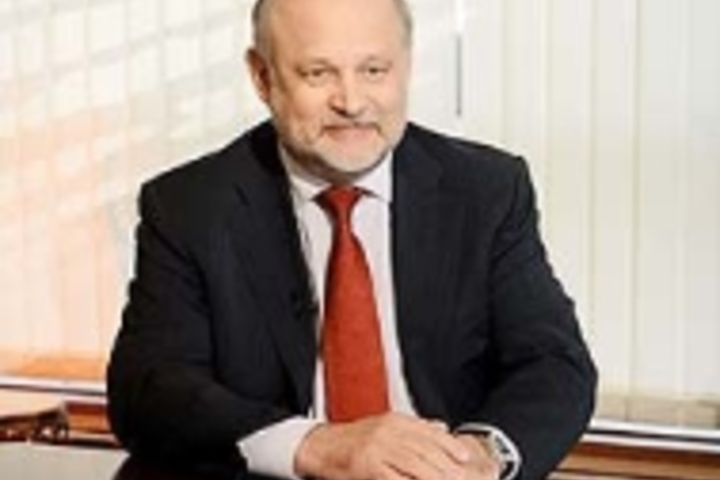
MOSCOW, RUSSIA - In August, it will be two years since Russia has joined the World Trade Organization (WTO). Far from all industries have embraced that move with enthusiasm. Some of them said their positions have been worsened by introduction of new regulations and tighter rules of the game in the market. How quickly will Russian companies be able to adapt to a new environment? What is being done to support Russian businesses? How is harmonization of Russia and EU’s technical regulations going on? How will Western sanctions affect our economy? Novye Izvestia spoke on those and other subjects with Vladimir Salamatov, General Director of the World Trade Center Moscow.
– Enough time has passed since Russia’s accession to the WTO. Is there more or less clear understanding what our country has won from that move, and what it has lost?
– I must say critics of Russia’s membership in the WTO put the question exactly like that now: who suffered from Russia’s membership in the WTO? I don’t think it’s quite right to say this. An integrated analysis of the economic situation shows that the impact produced by Russia’s membership in that international organization is not determinant for the condition of this or that industry, and less so for the country’s economy as a whole, in such a short period of time. Indeed, one might say that the fight for the Customs Union’s internal market is getting fiercer in such segments as consumer goods industry, meat and dairy products. But I’d like to stress once again that the WTO, first and foremost, means common rules for the entire global market, a common legal ground. Those are not only challenges, but also opportunities for domestic goods manufacturers.
– How successful has integration of Russian enterprises in the WTO system of requirements been so far?
– I believe the work we and our colleagues do in collaboration with the Economic Development Ministry and, first of all, with industrial unions, is bringing the first results. A systemic work with manufacturers’ associations, such as FRTP (pipe industry. – NI), Soyuzlegprom, Soyuzmoloko, and other allows us to look into the future with optimism. Not only do members of those associations demonstrate high level of concern in matters related to adaptation of their respective industries to the new conditions of Russia’s membership in the WTO, but they also develop and adopt concrete measures to raise competitiveness of individual enterprises and the industry in general.
– In 2012, the WTC launched a special project, “Russia in the WTO”. It was started in order to provide professional and hands-on assistance to the Russian business community in learning and efficient application of the WTO norms and rules. Has the project found its audience?
– In those two years, we have done serious work in the midst of the business community to raise awareness of the WTO membership conditions, and, most importantly, of Russia’s rights in the WTO. The WTC’s special project “Russia in the WTO” does a lot of educational work in Russia’s regions, involving local businesses and regional governments. Our work has been noted and found support both at the federal level and in the regions. The most important thing is that an increasing number of business community members have stated their need for information, and, hopefully, they have found in us an ally and a competent advisor on matters of adaptation to a new environment. Now we are making a transfer to a next stage, practical application of the WTO regulations and rules in everyday work at all levels of power and in economy.
– How exactly can WTC specialists help business?
– The special project “Russia in the WTO” has become the focal point in which people can get hands-on skills in order to help adapt industrial enterprises across Russia and the Customs Union to working in a new environment where Russia is a full-fledged WTO member. In the course of 2013, its experts organized 25 workshops/trainings of which 9 were run at the Moscow’s WTC, and 14 more in the field. Our specialists traveled to nine different regions of the country to train heads of federal and regional government bodies and members of the business community. Most of those workshops were sponsored by regional chambers of commerce and industry. We have formed partnerships with leading universities (Moscow State Institute of International Relations, Russian Presidential Academy of National Economy and Public Administration, Russian Foreign Trade Academy) to provide professional education in international trade and WTO rules. In particular, last year, the Academy of National Economy set up a new chair, of international commerce, at a faculty of its Higher School of Corporate Management. Furthermore, a new advanced education program got accreditation called “Competitiveness and Trade Policy in a WTO-Regulated Environment”. In the fall semester of 2013, MGIMO invited experts and partners of the special project, and some leading experts on trade policy to run an educational course “Global Business in a WTO-Regulated Environment” for attendees of the second higher education program. The website of the special project has an analytical section in which every week experts of the project comment on events related to international trade. Those analytical items are quoted in other web portals covering WTO-related subjects. In addition, we send them to our partners and subscribers.
– When China was getting ready to join the WTO, it trained about 5,000 lawyers who specialized in international trade matters and extended assistance in issues related to adaptation during the transition period. How are we doing about that?
– Russia does not have many specialists, but we’ve managed to bring together competent specialists within the framework of the special project. Besides, we have organized efficient collaboration with the leading universities that specialize in international trade (I named some of them, and I also should add the Higher School of Economics).
– Some time ago, you spoke about the need to harmonize and integrate technical regulations of Russia and EU countries. How’s the work going on in that area?
– This year in February, the WTC hosted an international conference, “Russia — Customs Union — EU. Technical regulation, Standardization, Compliance Evaluation. Achievements, Challenges, Prospects”. The conference was attended by heads of Russian and EU ministries. By now, we have completed work related to harmonization of technical regulations and other governing documents including in lists of statutes agreed between Russia and the EU. The technical regulations have come very close to the existing directives, especially so far as enforcement of safety requirements are concerned, which is important for every one of us, as all of us are consumers first of all, and safety is a basic and fundamental requirement for any product. One thing is of utmost importance for the promotion of the regulatory dialog. I mean the agreement signed between Rosstandart and CEN-CENELEC on September 17, 2013, during the 36th ISO General Assembly. The agreement opens up ways for cooperation of equal footing in the area of standardization, improvement of economic and scientific and technical relations, promotion of compatibility and interchangeability of supplied products. Within the framework of the project to approach technical regulation systems of the Russian Federation and the EU, scheduled to be implemented in 2013 to 2015, there are some priority lines of further collaboration. Those are finalization and international recognition of the Russian accreditation and compliance assessment system, and setting up an efficient market surveillance system, including matters of legislative harmonization so far as allocation of responsibilities is concerned. Those challenges need to be dealt with by all means before the processes of economic integration between Russia and the EU can go any further.
– According to an updated macroeconomic forecast of the Economic Development Ministry, in 2014 economic growth in Russia will slow down to 0-0.5%, and capital flight will be $100 bln. The WTC provides office space to nearly 500 Russian and international companies. How real is that forecast, based on your judgment of WTC clients?
– The general mood and behavior of companies that rent office premises from the WTC does not bear witness to any unfavorable trends. But no doubt changes in economy affect everyone, and the WTC can be no exception. For instance, the situation in Ukraine and the economic sanctions related to it, which have been imposed on Russia by some countries, lead to cancelation of a few large international events, which generally take place in our locations. We have seen some decline of our operating income. On the whole, however, taking into account the classic inertness of the real estate market, the market still has to react to a new situation. Furthermore, most clients who rent offices from the WTC are major companies which have sufficient economic resilience, and estimates of Russia’s economic growth this year should not produce any significant impact on our relations. In addition, very shortly we are to expect declined demand for office premises, reduced rates and scopes of construction, growth of the free space share, and rent going down.
– How big, in your view, was the impact produced by Western sanctions on Russian companies working with international partners?
V.S. Sanctions are personal in many ways, and partially they target financial institutions. Therefore, now I can’t give you any facts when our producers have been prejudiced in external markets because of sanctions. There are more than 80 non-tariff barriers with respect to Russian products. Those barriers have been in place for many years, and they must be analyzed from the standpoint of their compliance with WTO rules, and must be lifted using instruments available within the organization. Therefore, I would not draw direct links between the level of our competitiveness in external markets and the sanctions. The EU and Russia are key trading partners. The European Union cannot abandon our market altogether. We need to find ways out of the crisis rather than resort to destructive rhetoric.
– In 2010, the WTC opened the WTC Krasnodar, the biggest multifunctional business facility in the Southern Federal District of Russia. Is that project profitable? In which other regions are you planning to open such centers?
– The WTC Krasnodar is an evolving company with high occupancy rates of rented space. This year, the company is set to reach planned profitability figures. I must say the WTC Krasnodar, taking into account the Krasnodar market conditions, has broad prospects for future leadership in the region, in its specific service segment. As far as opening of such centers in other regions is concerned, for now, considering the current market situation and economic feasibility, we are not planning any further regional expansion.
– Moscow is seeing the number of business centers grow every year. Consequently, the spectrum of services they offer is also enlarging. How does it affect the WTC’s positions?
– Yes, indeed, we’re seeing noticeable growth of competition in all key segments for Moscow’s WTC, including office space lease, congress and trade fair services, hospitality (hotel and restaurant) business. In 2013, a few projects of multifunctional centers operating in that market segment have been carried out in Moscow. The trend towards supply saturation also has been observed in the business class hotel segment as well. In the second quarter of 2014 alone, two flagship facilities of Marriott and Four Seasons are to open. Naturally, they will make considerable impact on the alignment of forces in the market. The hotels which are to be opened use dumping strategies to ensure quick entry and to capture a market share. Not only does it lead to a decline of average occupancy rates in Moscow, but also has negative effects on the average room price. Speaking about congress and trade show activities, in addition to enlargement of space and emergence of new centers, there is another threat — a trend to change formats of events. Organizers increasingly bank on webinars, in which there’s no need to bring a large number of participants to one location. Some events take place in chain four- or five-star hotels fitted to host congresses. In addition, the event industry is growing fast, and it’s an industry that does not need any space of its own. In that environment, Moscow’s WTC manages to hold to leading positions, owing to its 35-year experience of hosting important international events every day, and to its reputation, which, everyone knows, is worth a lot. Another factor contributing to success is continuous improvement and enhancement of efficiency and performance.
For more information on this article, please contact Yulia S. Ivanova, WTC Moscow, at YSIvanova@wtcmoscow.ru.