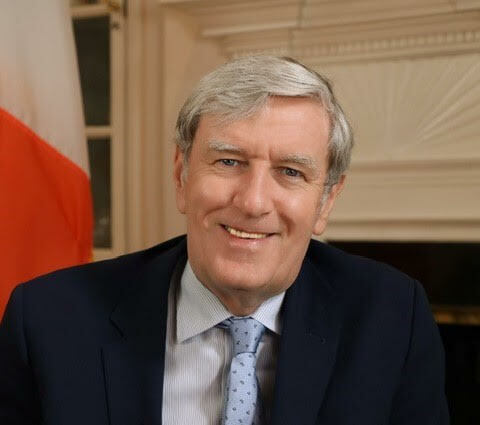
A Sit down with Ambassador Mulhall

November 01, 2021

The last time I had the honor of interviewing you, we were talking about Brexit and the impact it would have on Ireland. Can you give us a brief Brexit update? 

Since we last spoke, the United Kingdom left the European Union - on 31 December 2020. The EU-UK Trade and Cooperation Agreement (TCA) was agreed at the 11th hour and has assured tariff-free trade in goods. This was particularly important for businesses in Ireland given the significant trading relationship we enjoy with Britain. As has been widely reported, the Northern Ireland protocol, also agreed between the EU and the UK in December 2020, continues to be a subject of discussion between the two sides as there are differences about its implementation. The Protocol, which was jointly negotiated by the current UK Government and the EU, is jointly owned by them. It needs to be properly implemented by both sides. There can be no room for unilateral actions or renegotiation of the Protocol. From the perspective of the Irish Government, we will do all we can to ensure that solutions are found to support continuing economic advancement in Northern Ireland, to which the Protocol, by giving Northern Ireland full access to the EU and UK markets, has the potential to facilitate. 

Has the relationship between the Republic and Northern Ireland changed as a result? 

The Irish Government is investing heavily in its relationship with Northern Ireland. In particular, our Government’s program sets out commitments on a Shared Island Initiative. This includes efforts to work with all communities and traditions on the island of Ireland to build consensus around a shared future, underpinned by the Good Friday Agreement. The initiative includes a €500 million Shared Ireland fund, which provides for significant new, multiannual capital funding for investment on a strategic basis in collaborative North/South projects. From a trade perspective, you may have seen the interesting statistics published recently. Our imports from Northern Ireland have increased 77% while our exports to the North have risen 43% since the UK’s exit from the EU. The reasons for this are complex and the situation is still evolving. It is far too early to draw precise conclusions from it. Stockpiling pre-Brexit, COVID and other factors have no doubt contributed to the new trading dynamic. The significant increase in trade does however point to new supply chains emerging as businesses seek alternative sources of supply. 

What will be the long-term impact on the economy? 

I will leave predictions of the long-term impact to the economists, but I would like to point out two things. First, Ireland has been diversifying its links with other trading partners, making use of the many free trade agreements that the EU has with third countries. The Irish Government’s Global Ireland initiative is ensuring that we have an Irish presence on the ground in an increasing number of countries, which is designed to provide Irish businesses with new international opportunities. This is having a marked impact with dependence on the UK market decreasing and trade increasing with other key partners like the United States and other EU Member States. Second, I would like to highlight the unique economic opportunity that Northern Ireland now has under the arrangements agreed between the EU and the UK last year. It is the only place that has free access to the prosperous UK and EU single markets. Indeed, Invest NI commented recently on the increased interest from companies seeking to locate projects in Northern Ireland since Brexit. The United Kingdom will remain an important trading partner for Ireland and there is early evidence of increased trade between North and South in Ireland. More investment into Northern Ireland and North-South trade can only be good for both economies and societies. 

Most recently we have had to face the challenges of the Global Pandemic. How has this impacted Ireland? 

Like other nations across the world, Ireland has been significantly impacted by the COVID pandemic. The Irish Government took early and decisive action and prioritized the health of our citizens by implementing strict protocols to slow the spread of the disease. Significant fiscal supports were introduced to support businesses and to keep as many people in employment as possible. The strength of the Government’s fiscal position and strong economic performance before the pandemic struck has enabled the Government to take an active role in supporting the economy. Our economy also performed remarkably well during 2020, and was one of the few countries that actually recorded economic growth. This was powered by our strong export performance, in the ICT and life sciences sectors in particular. Ireland worked to ensure that supply chains of essential products were kept open. This was done by designating essential services and maintaining of critical transport routes. As a result, the OECD recognized Ireland as the fifth largest exporter of COVID-related goods in 2020. Our research community also participated strongly in the fight against COVID, with Irish researchers playing critical roles at the WHO and in developing the Astra Zeneca vaccine. Indeed, Irish companies were integral to transatlantic initiatives from developing therapeutics and testing to contact tracing and software used to verify safe travel. Companies like Icon, Nearform and Verifly were shining lights during a very difficult time. While the pandemic is far from over, Ireland has managed the vaccination of its population well, with 90% of our adult population now fully vaccinated. 

When do you think business will start hiring again? 

While Ireland has performed strongly, the economic impact has been very challenging for some sectors. As the public health situation improves further and the economy is further re-opened, we will begin to see the rate of unemployment reduce further. Most of the Irish economy will be reopened during September, including the entertainment sector and this will have a significant impact on hiring and increased job opportunities. It is also vital that international travel returns. Ireland welcomed over 11 million tourists in 2019 contributing over 1 billion euro to the economy. 

What do you anticipate will happen after wage subsidies are no longer available? 

The Irish Government intervened strongly to protect employment and extended these supports to ensure that people and businesses were protected from the worst impacts of the pandemic. As more people are vaccinated and health restrictions are further eased and the economy fully reopens, it is hoped that the business outlook and employment opportunities will improve without the need for the same level of subsidies. 

When will tourism and business travel be back to pre-pandemic rates? 

In 2019, Ireland saw record levels of passenger numbers, including 2 million visitors from North America. While it is impossible to predict when travel will return to pre-pandemic rates, Ireland has proved itself as an international hub for travel. Pre-clearance of travel into the United States is an important aspect of that. Unfortunately, travel restrictions still apply for many countries (including Ireland) entering the United States which is impacting on travel severely. It is difficult to see why Irish visitors cannot be allowed to enter the US given the very high levels of vaccination in Ireland. I am hopeful that EU-US engagements on this matter, that were established earlier this summer, will find a way to lift these restrictions soon. Ireland remains open, and welcomes vaccinated visitors from most countries including the USA with no quarantine requirements. 

Ireland has truly become the gateway to Europe. What impact is that having? 

Ireland is a gateway to Europe and continues to attract significant volumes of Foreign Direct Investment. We continue to provide companies with the unique benefits of a dynamic, innovative and competitive business environment which is underpinned by a diverse, young, highly talented, educated and English speaking workforce. Ireland has pursued a strategy of an open knowledge economy for many years now and the impact of this has been significant. While we continue to attract and retain multinational companies, their activities have evolved as the economy has moved into advanced manufacturing, emerging and future technologies, cutting edge life sciences and advanced business and customer services. Ireland’s evolution towards becoming a global innovation leader is connecting world class researchers and research centers with cutting edge companies, in what is becoming a highly innovative business environment. As well as the advancement of our economy, we have also seen our society changing to become one of the most open and inclusive societies in the world. We were the first country to legalize marriage equality by popular vote and we now have one of the most diverse populations in the EU. 

Has this impacted the cost of living? 

As a country becomes more successful, it must manage its competitiveness to ensure a good standard of living. This is doubly important for a country like Ireland that is so open to international trade and investment. Attracting investment is not just about the business environment but also about infrastructure, safety, education and ensuring Ireland is a place that people want to live and can afford to live in. Ireland was recently ranked by the OECD as the best place in terms of overall life satisfaction. 

How is the labour market in Ireland looking? 

Ireland had the fastest growing economy in Europe before COVID and was one of the only countries in the world to record economic growth in 2020. Current forecasts project strong economic growth in 2021 and 2022, at 7.2% and 5.1% respectively (according to the EU Commission). This bodes well for the recovery of the labour market, which was severely impacted during the pandemic. Our third-level attainment rate among 25–34-year-olds is significantly above the EU average (58.4% vs 40.5%) and Ireland has the highest level of STEM graduates per capita in the EU (among 20–29-year-olds). Ireland is also developing sophisticated approaches to research, third level education, remote working and regional development to ensure we are well positioned to attract and retain the brightest talent for the future of work. 

Is there any update on the Corporate Tax Rate for companies locating in Ireland? 

Ireland has maintained a transparent and consistent position in respect of our corporate tax rate for many years. There is a process at the OECD to develop a new framework for international corporate taxation. Ireland has been part of this process and has implemented recommendations arising from the first stage of the process (BEPS 1). Our Department of Finance publishes the details of these and other corporate tax reforms in the Corporate Tax Roadmap, which was updated earlier this year. Ireland remains committed to the OECD process and to achieving a comprehensive, sustainable and equitable agreement (BEPS 2) that meet the needs of all countries, large and small, developed and developing. 

You have been serving in Washington D.C. for a few years now. How would you compare the business climate between DC and Dublin? 

DC and Dublin have some similarities. They are both capital cities and have lots of beautiful green spaces and historic buildings and monuments. From a business perspective we both enjoy a vibrant tourist industry and excellent restaurants and entertainment venues. We differ also though, with many companies headquartered in Dublin, particularly the ICT and Financial Services sectors, whereas DC tends to house the Government and Regulatory Affairs offices of its major companies. Both cities share a similar desire though to become centers of investment and commerce. In this regard, my Embassy was delighted to be involved in the first virtual trade mission between the Mayor’s Office of Planning and Economic Development and the DC Chamber of Commerce, and the Dublin Chamber of Commerce and many of our State Agencies, earlier this year. The Mayor’s Office has a plan to make DC a hub for international business and we very much share this ambition for our capital city and country. 

You have a devoted following on social media that shares your passion for poetry. How were you introduced to poetry and please share a favorite poem if you would? 

I am an admirer of the work of W.B. Yeats and am the Honorary President of the Yeats Society. As an Irish historian, I have a special interest in the manner in which Yeats’s poetry brilliantly sheds light on key moments in Ireland’s past. His poem, Easter 1916, is a favorite of mine. It deals with the Easter Rising of 1916, which inspired Ireland’s independence. A shorter Yeats poem that I like to recite is ‘The Lake Isle of Innisfree’. ‘I will arise and go now, and go to Innisfree.’

More News

From the Vibrant Irish Coast to the World Stage

March 9, 2026 - The Visionary Journey of Donegal Natural Soap Rooted in the rugged, untamed, naturally beautiful landscape of northwest Ireland and guided by scientific precision, Donegal Natural Soap is more than a skincare brand - it embodies heritage, integrity, and resilience. Founded by bioengineer Isobel Sangha, the company blends nature, innovation, and unwavering quality, using the finest ingredients to create products now reaching customers far beyond Ireland’s shores. What began in a family kitchen has evolved into a growing export business grounded in authenticity and environmental responsibility. Founder Isobel Sangha shares her journey from a home startup to an export-focused skincare brand. About the Business and Founding Story What inspired you to create Donegal Natural Soap, and how has the company evolved since its launch? I grew up surrounded by the landscapes of Donegal — its coasts, mountains, and rural roads. As one of eight children, I spent a lot of my childhood outdoors, learning about local plants, herbs, and wildlife, and gathering hazelnuts, mushrooms, and mussels. That early bond with nature greatly influenced my love for natural ingredients. Although I later studied aeronautical engineering and completed an apprenticeship in the UK, I felt drawn to healthcare. I returned to Trinity College Dublin to earn a master’s in bioengineering and then worked in research and development, gaining experience in clinical design, quality systems, and regulatory compliance. The turning point came when my second son was diagnosed with atopic eczema. I was advised to remove all commercial baby products from his routine, which prompted me to create a simple, natural soap in my kitchen using locally sourced ingredients. Friends and family quickly saw the benefits and encouraged me to approach local retailers. When I researched the market, I discovered that most natural soaps in Ireland were imported from France and Germany, leaving a clear opportunity for an Irish-made product. I began supplying local shops in 2010; fifteen years later, the business has grown steadily, built on quality, integrity, and a loyal customer base. My happy place is walking through the stunning Donegal countryside, drawing inspiration from both the land and the sea. With my bioengineering background, I approach product development with a detailed, scientific mindset. I studied biomimetics — the idea that many solutions to modern problems already exist in nature — which guides how I source and design our products. Donegal itself defines our brand: its purity, ruggedness, and natural beauty are reflected in everything we do. From the ingredients we select to the textures, scents, and packaging, our products tell a story of place, heritage, and sustainability. Additionally, all our products have been palm oil–free since the very beginning in 2010, and in 2018, we became the first Irish company to be Certified Palm Oil Free . Our Donegal roots ensure that every bar of soap carries a sense of authenticity, quality, and environmental responsibility. As a founder in the natural products industry, what challenges did you encounter early on - and what kept you motivated? Running a small business means juggling multiple roles - maker, procurement manager, problem solver, and salesperson. Balancing these responsibilities is challenging. As the business grows, managing employees and increasing production creates even more complexity. What kept me motivated was customer feedback. Hearing people say, “Wow, this has changed my skin,” made all the difference. We’ve faced major roadblocks, including Brexit, COVID, and ongoing global instability. Success requires resilience and the ability to pivot. We have adapted each time and overcome the challenges we have faced. Exporting and International Expansion What motivated you to expand Donegal Natural Soap internationally, and when did you recognize that there was a global demand for your products? After 15 years in business, I have built a loyal and dependable local customer base. Soap is a universal, daily necessity, and my main customers are repeat buyers who genuinely value quality. With this strong foundation, expanding into international markets seemed like the natural next step. I recognized a growing global demand as awareness of environmentally caused skin issues and the need for ingredient transparency increased. While soap is a common product, ours is positioned as a high-quality, natural alternative, with customers often sharing that our products are life-changing for their skin. Hearing that feedback consistently boosted my confidence that Donegal Natural Soap could stand out on a worldwide level. What logistical or regulatory challenges have you encountered internationally, and which markets are showing the strongest response so far? Expanding internationally offers both opportunity and challenges. While the EU is an accessible market, it is highly competitive and constantly changing, especially in the natural skincare sector. Standing out in a crowded market requires effective branding and clear differentiation. With a small team, managing regulatory requirements, tariffs, and customs procedures, particularly in the U.S., can be time-consuming and demanding. Careful planning, strict compliance, and the establishment of strong trade partnerships are crucial to overcoming these hurdles. Regarding market response, we are seeing particularly promising traction in the Nordic countries, where there is a shared appreciation for natural, minimalist, and environmentally friendly products. Germany has also proven to be a strong and receptive market. More broadly, the longstanding international reputation and trust in Irish-made goods continue to positively influence our export strategy. Joining World Trade Center Dublin What inspired you to join World Trade Center Dublin, and what do you hope to achieve through your membership over the next 12–24 months? Having the right people representing your company globally is essential — especially those who understand the nuances of different markets. While I would love to travel extensively, it’s not always feasible. The expertise and network of the World Trade Center Dublin feels like having an extended team that can facilitate international introductions and provide guidance on retail positioning. Over the next 12–24 months, my goal is to build lasting relationships with retailers in key international markets and establish a strong, sustainable export presence. Brand and Product Strategy How does your focus on natural ingredients and sustainability influence your international appeal, and how do you maintain authenticity while adapting to new markets? Our commitment to natural ingredients and sustainability resonates strongly in today’s global market, where consumers are increasingly eco-conscious and skeptical of synthetic-heavy products. There is a growing movement toward zero waste and simplified skincare routines, and bar soap is making a strong comeback as people move away from liquid soaps filled with silicones and artificial oils. In this environment, customers are more informed and eager to support genuine, transparent, and environmentally responsible brands. Maintaining authenticity while growing internationally depends on consistency. We uphold the same high standards we set from the beginning — from sourcing raw materials to managing energy use and reducing waste. In an industry where greenwashing is widespread, transparency is crucial. Customers have the right to know exactly what they're putting on their skin, and we stay true to our original mission by ensuring our products meet both ethical and quality standards, regardless of the market. Leadership and Vision What leadership principles guide you, and what does expansion look like for Donegal Natural Soap in the future? Integrity is at the heart of everything I do. I invest deeply in the business and stay actively involved in all aspects, from challenging suppliers on sourcing and reviewing ingredients to collaborating closely with my team. Donegal Natural Soap has enduring staying power because we have never cut corners. We continue to operate on the same principles I followed when I first experimented in my kitchen — integrity, resilience, and long-term commitment. Looking ahead, I remain focused on strengthening our core product line while exploring new opportunities. One exciting area is developing an oil-based skincare collection that incorporates locally sourced seaweed, partnering with suppliers who share our values. On the international front, we are exploring growth in Asian markets such as Japan and China, where there is strong potential for premium, natural skincare products that align with our commitment to quality and sustainability. What advice would you give Irish SMEs considering exporting? Stay vigilant about your pricing and procurement strategy. In today’s global environment, raw material access, shipping expenses, and currency fluctuations can all be unpredictable, and these changes can quickly affect profit margins. It’s crucial to understand your actual cost structure before entering a new market and to include realistic buffers. Regulatory compliance and logistics are equally important. Each market has its own standards, documentation requirements, and timelines, so doing your research early can prevent costly delays later. Careful forecasting, strong supplier relationships, and flexible planning are essential. Exporting offers great opportunities, but preparation and attention to detail are what make all the difference. Built on Nature, Backed by Science, Ready for the World From foraging along Donegal’s expansive shores to navigating international markets, Isobel Sangha has built Donegal Natural Soap on a foundation of authenticity, science, and sustainability. “Our natural products are designed with a purpose; putting function over form with a holistic care for people and the environment.” With resilience shaped by global challenges and a loyal customer base at home, the company is now poised for thoughtful international expansion. As consumers worldwide seek transparency and environmentally responsible products, Donegal Natural Soap stands ready — rooted in nature, guided by integrity, and prepared for the global stage. Read More

Taking Fresh Flavour Worldwide

February 5, 2026 - Saucery’s Path to International Expansion An exclusive interview with Dirk De Cuyper, Founder of Saucery - covering the brand’s origins, its differentiated growth strategy, and how the World Trade Center Dublin and its global network can support its international expansion. In a global food market traditionally dominated by shelf-stable products, Saucery is establishing a new standard with fresh, chef-made sauces designed for both professional kitchens and discerning consumers. As commercial kitchens face increasing time and labour constraints, flavour and quality remain non-negotiable. Saucery addresses this challenge with chef-crafted finishing sauces made from high-quality ingredients, delivering consistency, efficiency, and restaurant-level results without compromise. Founded by Dirk De Cuyper and shaped by his experience in the food and events industry, Saucery was created to fill a clear and underserved market need. Your journey into food manufacturing is not a traditional one. How did Saucery get started? Before founding Saucery, I spent 15 years running an events business, starting in Miami on private yachts and jets, where food quality was key to every experience we provided. What always caught my attention was the gap between high-quality meals and the sauces people paired with them. Friends would buy top-tier ingredients—like a great steak or carefully sourced produce—and then reach for a sauce that had been sitting on a shelf for years. When I examined the market more closely, I realized that both the US and UK were dominated by ambient sauces made for shelf life rather than flavor. Very little was available that was fresh, chef-made, and chilled. That gap became the foundation for Saucery. What was the core mission behind launching the brand? From day one, our mission has been to bring fresh, restaurant-quality sauces to both food service and home kitchens without compromise. I’ve always believed that “the sauce makes the meal,” and this philosophy is at the heart of everything we do. We aimed to make it simple to elevate everyday meals without the time, skill, or effort usually needed to make sauces from scratch. Saucery is fundamentally chef-driven—centered on the idea of “Fresh from the Chef”—while remaining accessible and convenient for customers. Freshness, taste, quality, and ease of use are at the foundation of the brand and guide every decision we make. How does Saucery stand out in a crowded food market? What’s interesting is that once you look beyond the shelf space, the chilled sauce category isn’t crowded, especially when it comes to branded products. Most sauces are ambient, heavily processed, and designed to last for years. Saucery stands out. Our sauces are fresh, chilled, and naturally preserved, offering a 95-day refrigerated shelf life without artificial preservatives. This makes us a premium choice that aligns with how people cook and eat today. You operate across both food service and retail. Why was that dual approach important? Needs vary, but the core opportunity stays the same. In food service, especially in large-scale catering, operators need consistency, efficiency, and cost control. Making everything from scratch isn’t always practical, and ambient solutions often lack depth and quality. In retail, consumers are cooking better food at home than ever before, but they don’t always have the time or confidence to make sauces themselves. We offer a simple solution that provides professional results with minimal effort. What are your key growth priorities over the next 12–24 months? This is a pivotal period for Saucery. On the food service side, we are close to securing a national wholesaler in the UK, which would open access to hotels, airline catering, and large-scale contract catering operations. In retail, our focus is on advancing discussions with major grocery and premium retail partners, as well as broader engagement with independent and specialty retailers. Trade shows, industry events, and in-market sampling will continue to play a central role in building awareness and driving trial, as tasting is essential for a chilled, fresh product like ours. How are you approaching international expansion? Very deliberate. Our priority is to establish a strong foundation in the UK first. From there, Ireland makes the most sense as the next step — it’s geographically close, culturally aligned, and highly values premium food brands. Beyond Ireland, we’re exploring several European markets, including Benelux, Germany, Poland, and Scandinavia. These regions prioritize quality, convenience, and fresh food. The US is very much part of our long-term plan, but we want to enter that market once our European presence is solidly established. What led you to join World Trade Center Dublin? As an ambitious food brand with international goals, having access to the right networks is essential. World Trade Center Dublin provides market insights, trusted introductions, and local support that can greatly lower the risks of expansion. We recognize the true benefit of accessing local expertise, especially as we explore the Irish market and broader European opportunities. How do you see the World Trade Center network supporting your export plan? Support comes in many forms - from market research and regulatory insight to introductions with distributors and retail partners. Having a global network that understands local nuances allows us to make better decisions and move faster. Ultimately, it’s about collaboration. We don’t just want access; we seek meaningful partnerships that support our sustainable growth. What would success look like for Saucery within the World Trade Center network? Success means entering new markets with confidence and clarity. If we can establish Saucery in Ireland, gain momentum in Europe, and utilize the WTC network to build strong trade relationships, that would be a major achievement. Finally, what is your long-term vision for Saucery as a global brand? Our long-term goal is to build on the strong foundation we’re establishing in the UK and expand that success worldwide. We want Saucery to be recognized globally as the standard for fresh, chef-crafted sauces—products that consistently deliver quality, freshness, and convenience for both professional kitchens and home cooks. As we enter new markets, our focus will remain on preserving the product's integrity while making it easier for chefs and consumers around the world to achieve restaurant-quality results. Ultimately, Saucery aims to become a trusted, go-to brand wherever fresh flavor and efficient execution matter most. Saucery represents a major shift in a category that has traditionally valued shelf life over quality. By providing exceptional, chef-crafted sauces that focus on freshness, consistency, and ease of use, the brand is redefining what both professional kitchens and consumers can expect from everyday flavor. With a targeted growth strategy and clear international ambitions, Dirk De Cuyper is building a business ready to expand across markets while maintaining high standards. Supported by the World Trade Center Dublin and the broader World Trade Center Association network, Saucery’s next growth phase aims to expand its global presence, develop valuable trade partnerships, and deliver fresh, restaurant-quality flavor to communities worldwide. Read More